


Archive for Blog
Mental Toughness on the Basketball Court
Posted by: | CommentsThis was my greatest nemesis as a young player. I could score from almost anywhere on the court, except I had a problem with the breakaway lay-up. I know what you are thinking. I missed these shots at will when I was growing up until I was near 8th grade.
It got to the point that instead of laying it up, I would stop near the basket and shoot a little jump shot. It had to have been terribly embarrassing for my father as he watched from the sidelines. I hate to think how many points I could’ve scored if I could’ve hit a simple breakaway lay-up.
As I was able to get past that I realized it was a problem with my mental toughness and mindset. I write about this often because it is that important.
Basketball, I believe, is a game of perfected repetitions. Many players are great dribblers or ball handlers because that is the most common thing done on a court. Big players aren’t very good dribblers typically because common sense says that they don’t practice as much. Watch a good point-guard handle the ball and look at his face. That is a confident player who knows that he has that skill down. This player believes in himself. But focus on that same player two passes later when he has an open shot and you may find a completely different face.
The forehead rises and crumples a little and this player is unsure of himself. I say this because this is a form of mental toughness. A good basketball player always believes that he can do anything on the court well. He believes he will make any and every shot, just like he knows nobody will take the ball from him while dribbling.
You need to focus on being confident. Confidence is created from perfected repetitions and practice, practice, practice. Watch Shaq shoot a foul shot and you’ll see a player who is completely lost at the line. Each shot is completely different from the other one. No confidence. When he makes it, it seems like an accident. Be confident and get there by completed perfect repetitions of what you are working on.
Watch games with a purpose. You’ll hear me talk about this all the time. Watch games on television or go to high school games and college games. When I was 5 years old I remember my dad taking me to high school games and asking me if I could see myself out there one day. That stuck with me for years as it moved on to college.
Watch instructional videos. When I was younger I would go through the Pistol Pete set, the Steve Alford set and anything else my dad could get his hands on. Was it worth it? To my father it was and to me it was. It’s a minimal investment worth a potential scholarship. If you can get one source to get a light to go on and help you realize the type of player you can become, you’d want it wouldn’t you? I would think so. Just like people pay for education and dance classes and such.
Don’t be afraid of the competition. Push yourself and play against players that are better than you. Sure, you may be intimidated at first, but that is something that goes away with practice and repetition. When I was in 7th grade I was chosen to play with the 9th graders and it was a big deal to me. I was very small and at first I was very intimidated. That passed as I realized what my strengths were and what I needed to work on.
Use Springbak Springsoles. Springbak Springsoles are used by the top Division I Universities for a competitive edge and injury prevention. In basketball, it eliminates shin-splint problems, extends your shooting range, and much quicker reaction times to the basketball. Check out this testimonials video, it explains why pro athletes, trainers and coaches use our product. Then Dr. Michael Yessis Ph.D explains the science behind the product and how and why they work to improve athletic performance in any sport!
I mentioned in other articles about going to camps and this I would highly recommend. Great players want to play against great players. When I went against Jason Kidd I learned that I wasn’t nearly as good as I thought. When Travis Best scored 10 points on me in 4 possessions I was pretty humbled. When that happens, you have two choices, quit or get better. Anyone reading this should pick the get better part. Learn from experience and move on. Those players were pros and I knew they were going to be pros then. https://www.springbak.net/testimonials
Basketball, golf, hockey, and football are truly games of perfected repetition. I got over my lay-up phobia by hard-work and practice. It wasn’t easy and I faltered at times, we all do, but the best players learn from mistakes and improve on them. In life we will all fail at something but what determines the type of player and person we are is how we act when we fall down. The best way to be mentally tough is to put yourself in situations and overcome them. That doesn’t happen while you’re playing video games.
Triathlon Training tips by Springbak: Making an Efficient Transition
Posted by: | Comments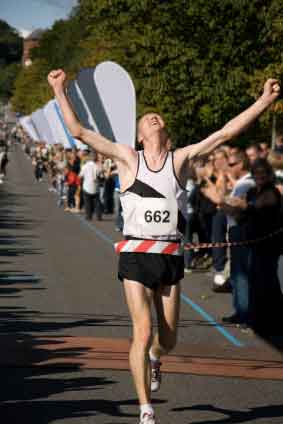 Most triathletes spend the bulk of their training time focused on the three events: swimming, cycling, and running. But the transition between each event also requires training. Each triathlon has two transitions: a swim-to-bike and a bike-to-run. Although they seem simple a poor transition can add precious time and waste energy during a race. A good transition can improve your position and spirits while a bad one can leave you struggling to make up lost time. Here are some tips to help you prefect your transitions.
Simplify:
Keep your transitions clean and simple. By this, Springbak means don’t try to do too many things during a transition. Keep the number of tasks to the bare minimum. In a transition, the more you have to do, the more time it takes and the more that can go wrong. During the swim-to-bike transition, the fastest athletes may only put on a helmet and grab their bike to run out. Wear a one-piece racing suit to avoid clothing changes if possible. Some racers leave their shoes attached to the pedals and they put them on while riding. A trick they use is to rubber band the heel loops of the cycling shoes to the bike so that they are right side up. Sunglasses can be looped over the handlebars and put on down the road. Food and drink are already attached to the bike so you can fuel on the road as well.
Multi-task:
If you want to be efficient in the transition, you need to learn how to do a few things at once and keep moving in a seamless, fluid motion. Know what things you can do while running or riding or on the run-up to the transition zone and what you have to do before leaving. Something as small as taking off your cap and goggles, or unzipping your wetsuit on the run-up to the bike can save seconds, putting on your cap and sunglasses as you run is equally efficient. It may seem like these things take little or no time, but this will help keep your momentum for the next event.
Train for Transitions:
It is clear that if you want to get better at transitions, you need to practice them. But many athletes don’t practice this part of the race. A good time to practice is during your regular event training, but a mental walk-through of a transition is also important. Practicing transitions during your regular training will help you feel very comfortable on race days. This sort of practice is also a good time to try new techniques and to see what you can do without. Never try something new on race day.
Footwear Footwear: Springbak sponsors many of the top triathletes in the world. Triathletes use the Springbak Springsoles to get a competitive edge on their competition, as every second counts! Our performance insoles work by giving the runner a much longer stride length and quicker stride frequency. The average runner gains 4-6 inches per stride, so over the course of a marathon or triathlon, you have fewer strides, towards the end of a longer run you still feel fresh, and able to maintain a quick and efficient stride. To understand how Springbak accomplishes this, read our ‘patents’ page. Springbak Springsoles are used in the NFL, MLB, NHL, MLS, Olympic Teams and Top Division I Universities across the USA!
Race Day Set-up:
On race day, you should arrive with enough time to survey the transition area before the race and actually do your run-ups and exits so you know exactly where to go. Lay out your gear and do a test run to make sure everything is where you need it and ready to go. (This is very important) Make sure you can find your bike and know your path in and out. This pre-race check is also a good time to do a mental rehearsal as well. Visualizing your transition will help you deal with any challenges that are not a part of your practiced walk-through.
As you do more and more events, you will find what works best for you, but these tips will help you develop transitions that are efficient so you can save your energy for biking and running.
Sincerely,
Mark Vona – GM Springbak, Inc. ~ Hope you enjoy these training tips, all the best to you, please comment and add any of your personal triathlon tips that work for you as well. Happy running!
Quickness Training Tips for Basketball: Maximize Your Quickness with Technique
Posted by: | Comments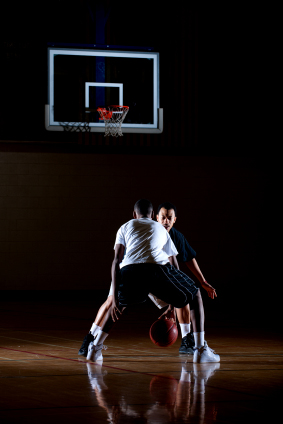 To maximize quickness in basketball, whether making a cut left or a right cut, technique is the key. Regardless of the sport that has a defender guarding an offensive player, there is a continual need for the offensive player to “beat” the defender. This is especially necessary in sports like basketball, soccer and football.
As just stated, technique is the key. In order to cut left, a quick short movement of the right foot to the floor is the start of the cut. The right foot should hit the floor or ground with an explosive push to the left with the entire length of the foot on the inside of the shoe striking the floor or ground with an explosive push off to the left, which can best be described as side ward, low to the floor or ground, jump to the left. As this side ward push or jump is being performed, the players left leg should be reaching out to the left, as his or her body leans to the left. In this way, when the left foot lands an alley to go by the defender should be created.
All of this movement, the push off, the bodylean and the reach out of the left leg should be simultaneous as possible. To cut to the right past a defender, everything is reversed. First, the left foot hits the floor or ground and the right leg reaches out as the body leans right.
Some of the greatest practitioners of this technique or art form are broken field runners in football like Gayle Sayers, or on the basketball court, Michael Jordan. If you watch film or You-Tube, you can study the masters just mentioned, utilizing this technique. If dribbling the basketball, bring the ball back up to the right hip when making a cut right, if right handed. When making a cut left, the crossover dribble should be made close to the body and low, with the hand behind the ball pushing the ball to be easily picked up with the left hand dribble.
Have fun and enjoy these quickness techniques! Bill Crow ~ Chairman Springbak Company – Former Professional Basketball Player
Springbak Wants To Know Who Will Win The World Series 2012?
Posted by: | CommentsThe 2012 World Series is in full swing and we want you to get into the game with us!
Take your best guess for your chance to win a pair of Springbak Springsoles and a Springbak T-Shirt!
 To participate, comment below on this blog post (“Springbak Wants To Know – Who Will Win The World Series 2012“) with the answers to the following questions:
1) Who will win the series?
2) How many games will the series go?
3) Tiebreaker: How many total points scored in the last game?
Whoever answers closest without going over, wins a pair of Springbak Springsoles and a Springbak T-Shirt!
Responses must be completed & posted to Springbak”s blog post”Springbak wants to know who will win 2012 World Series” Prior to Game 4, which takes place Sunday night October 28, 2012. Latest updates & news at www.worldseries.com
All guesses will initially be private/hidden and publicized on Nov. 1 after Game 7, if needed. Will post the winner as soon as we have a World Series Champion!
Thanks for playing with us and GOOD LUCK!
_____________________
Visit the Official Springbak® Website at www.springbak.net
Performance Boosting Springsoles / Insoles – Run Faster, Jump Higher, Lessen Fatigue
Springbak Spotlight on Distributors
Posted by: | Comments Gridiron Development Football League Partners with Amplify Your Performance, LLC ~ Promoting Springbak Springsoles
Baton Rouge, LA-On March 20, 2012, Gridiron Developmental Football League joins forces with Amplify Your Performance, LLC to implement Springbak Springsoles into the league for the 2013 season. The companies have become partners in order to promote health, longevity and integrity in the GDFL while increasing the athletic performances for league participants.
Amplify Your Performance, LLC specializes in a variety of legal performance enhancing products for athletes and other materials geared towards athletic performance. The company is best known for its Springbak®Springsoles, currently the only patented, scientifically proven performance-enhancing insole on the market. The Springbak®Springsoles are designed to increase an athlete’s agility and strength while protecting the body through shock absorption – resulting in longer careers. Scientists and medical personnel have worked together to create the Springbak’s to have a dual effect – spring and bio-electrical. The spring effect increases the athletic ability which is measured and documented through higher verticals, faster timed races, increased stride lengths, and other measurable physical activity. The bio-electrical effect accelerates the vibration frequency or the current flow in the human body resulting in more energy. Today, the Springbak®Springsoles are gaining national attention as athletes ranging from high school students to NFL first round draft picks and Olympic athletes actively seek company CEO Eric Louis’ advice on increased athletic performance and specifically the Springbak®Springsoles.
“As a former professional athlete, I know the advantages in having a competitive edge while in competition,” Louis explained during a press conference, “When I started this company, I know most athletes are both looking for and wanting that competitive edge, unfortunately the majority find the edge using ILLEGAL performance enhancers. I wanted to provide products that would not only propel athletes to a new level of competition, but also protect their bodies in order to extend their projected career timelines, LEGALLY.”
Beginning in June 2013, Gridiron Developmental Football League participants will have the opportunity wear Springbak®Springsoles. Based on the scientific findings from Amplify Your Performance’s research team, the new implementation should result in more athletic, agile athletes and over time, longer, healthier careers for the players.
For more information on this partnership and Amplify Your Performance, LLC products, visit www.gdfl.org.
“Springbak is proud to have a professional athlete distributor like Amplify Your Performance, LLC promoting our product”. ~ Mark Vona – GM Springbak, Inc.